Bitcoin in the US Strategic Reserve Explained Why America Has Not Started Buying Yet
Want articles like this for your own video to promote it on YouTube and Google? Order them through the Telegram bot @sat_sit_bot. Articles with your video embedded are written and posted by the bot itself — on popular topical sites (no ads). Your first 50 articles are free.
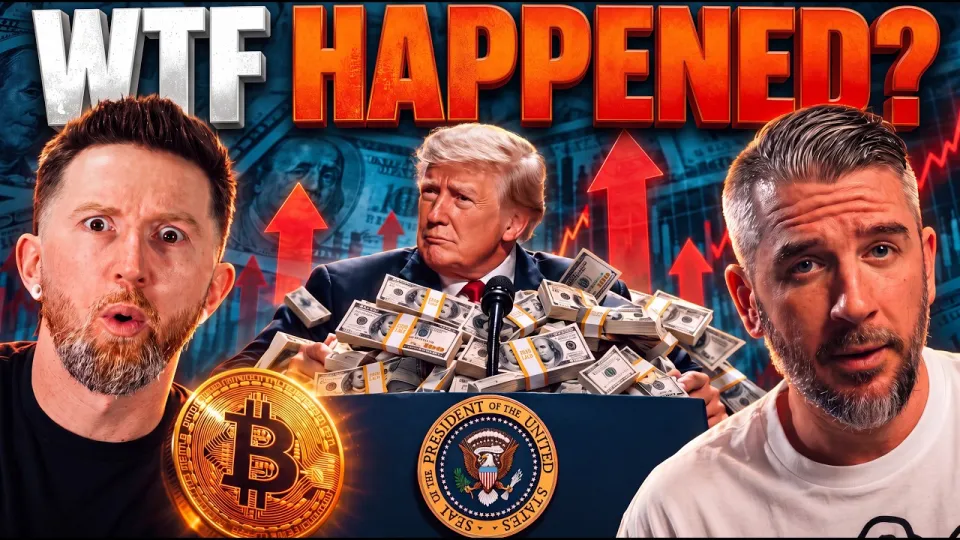
A US strategic bitcoin reserve has not been filled through open-market purchases mainly because the legal, accounting and custody machinery for buying a volatile asset with public money does not yet exist. What exists instead is a stockpile assembled from coins seized in criminal cases, plus a policy commitment to hold rather than sell them. The gap between "we will keep what we already have" and "we are buying more" is where the entire debate sits, and it is a bureaucratic gap far more than an ideological one.
What the strategic reserve actually contains right now
The reserve as currently constituted is a consolidation of government-held bitcoin, not a purchase program. Coins confiscated by law enforcement — from cases such as the Silk Road seizures — were transferred into a designated holding rather than auctioned off as in previous cycles. That is a meaningful shift in behavior: the US government has historically treated seized crypto as inventory to be liquidated, and each auction added supply to the market. Holding instead of selling removes that overhang, but it does not add a single new coin of demand.
This distinction matters for anyone reading headlines about the reserve. A reserve built from seizures is budget-neutral. It costs the taxpayer nothing, requires no appropriation, and needs no new authority beyond the executive decision to stop selling. A reserve built from purchases is the opposite: it needs money, legal cover, and a custodian. Only one of those two things has happened.
Why buying bitcoin with public money is a harder problem than holding it
Buying bitcoin for the US strategic reserve runs into four practical walls, and each one is enough to stall a program on its own:
- Appropriation. Federal agencies cannot simply spend money on a new asset class without Congress authorizing the outlay. A purchase program requires a budget line, and a budget line requires legislation.
- Budget scoring. Government accounting treats asset purchases in specific ways. A volatile, non-yielding asset does not fit neatly into existing scorekeeping rules, and the scoring determines whether a purchase looks like an investment or a loss on the books.
- Custody and audit. Someone has to hold the keys, insure them, and answer to inspectors general. The government's existing custody arrangements for seized crypto are built for liquidation, not long-term storage.
- Market impact rules. A buyer of the US government's size has to think about how it executes. Announcing a purchase plan in advance moves the price against the buyer, which is exactly the kind of self-inflicted cost that procurement rules exist to avoid.
None of these are statements about whether bitcoin is good. They are statements about how the federal government spends money, and they apply identically to gold, foreign currency, or any other reserve asset.
What the market keeps getting wrong about reserve headlines
Every reserve headline produces the same pattern: a sharp move up, then a fade. The reason is that the market prices expectations of future demand, and so far the announcements have changed supply behavior rather than demand. Holding seized coins removes selling pressure, which is bullish at the margin, but it is a one-time effect. Traders who bought the headline expecting a Treasury bid are holding a position that has no buyer behind it yet.
This is why the price reaction to reserve news has become progressively smaller. The first mention was a shock. The second was confirmation. By the time the topic is being debated on podcasts, the information is already in the price. What is not in the price is an actual purchase order, and that is the only thing that would reprice the market in a durable way.
The political economy of a purchase program
There is a simpler reason a purchase program has not launched: nobody wants to own the first buy. If the government buys bitcoin and the price falls 30% the following quarter, that is a headline with a named official attached to it. If it waits, it avoids the downside and keeps the upside of having signaled support. Delay is the risk-minimizing choice for any individual decision-maker, even when the collective outcome is a program that never starts.
That incentive structure explains the pattern of announcements without action. A commitment to hold is costless and popular with the crypto constituency. A commitment to buy is expensive, legally exposed, and unpopular with everyone else. The rational move for a politician is to do the first and describe it as if it were the second.
What would actually have to happen before a purchase
The sequence required for a real buying program is fairly mechanical, and it can be tracked:
- Legislation or an explicit statutory authorization naming bitcoin as a permissible reserve asset for the Treasury.
- A budget line with a stated size, whether that is a fixed dollar amount or a percentage of reserves.
- A custody framework with named institutional holders, insurance, and audit access.
- An execution plan designed to minimize market impact, likely through a custodian or an over-the-counter program rather than open market buying.
- Public reporting on holdings, so the reserve can be verified rather than assumed.
Until at least the first two of those exist, any claim that the US is about to buy is speculation. The reserve is real; the buying program is not.
Questions traders keep asking about the reserve
A recurring theme in discussions of the reserve is whether holding seized coins counts as a reserve at all, and the honest answer is that it counts as a stockpile. The strategic value comes from the signal that the government will not dump its holdings, which is a genuine change from the auction era. The second recurring theme is timing: people want a date. There is no date, because no legislation sets one. The third is whether other countries buying forces the US hand. It does not — reserve decisions are domestic political calculations, and the US has the luxury of moving slowly because the dollar is already the reserve currency.
Bottom line
Bitcoin has a place in US reserve policy on paper, but the buying has not started because the authorization, budget scoring, custody and execution framework are all still missing. The reserve currently consists of seized coins that are being held instead of sold, which is a supply-side change, not a demand-side one. Until Congress authorizes an appropriation, every "US is buying bitcoin" story is a prediction rather than a fact. This breakdown draws on the discussion from the Simply Bitcoin channel, where the gap between reserve announcements and reserve purchases is the central point.
FAQ
Does the US already own bitcoin in a strategic reserve?
Yes, but only in the form of coins seized through law enforcement actions that were moved into a designated holding instead of being auctioned. No open-market purchase has been executed. That means the reserve exists as a stockpile, not as an active buying program, and the difference matters for anyone trying to trade the news.
Why would the government hesitate to buy bitcoin directly?
Because buying requires appropriated funds, a budget score, a custody arrangement and an audit trail, and none of those are in place for a volatile asset. A purchase also creates personal political risk for whichever official signs off first. Holding costs nothing and carries no downside, so delay is the path of least resistance.
Would a US purchase program be bullish for bitcoin price?
The size would matter more than the announcement. A program executed through a custodian over months would remove real supply from the market and change expectations permanently. A one-off symbolic purchase of a few thousand coins would be absorbed quickly and would likely fade, much like the reserve headlines already have.
What should I watch to know a real purchase is coming?
Watch for legislation naming bitcoin as a permissible Treasury reserve asset and a budget line with a stated amount. Custody and audit details usually appear next. Until those show up, treat any claim of imminent buying as speculation, regardless of who is saying it.
Key takeaways
- A US strategic bitcoin reserve exists on paper, but it has been built from seized coins rather than open-market purchases.
- The core blocker is not a lack of conviction but the absence of a legal and accounting framework for buying a volatile asset with public money.
- Budget scoring, custody, and audit requirements all have to be settled before any Treasury purchase order can be signed.
- Market reaction to reserve headlines fades quickly because announcements have so far changed supply expectations, not actual demand.
- A formal purchase program would be a far bigger signal than any executive order or press conference.
Source: LEAKED: Here's The REAL Reason America Hasn't Bought Bitcoin For its Strategic Reserve... · Markdown version